

Blog
How to Automate Blog Topic Clustering Using AI Tools: A Step-by-Step Guide for 2026

The days of manually brainstorming blog topics and organizing them into cohesive content clusters are over. In 2026, AI-driven tools have evolved beyond simple keyword suggestions—they now offer advanced clustering algorithms that map out entire content strategies in minutes. But here’s the catch: while these tools save time, using them effectively requires a clear process and some common-sense guardrails. Let’s break down how to automate blog topic clustering step by step, with real-world examples and practical tips along the way.
—

Why Automating Blog Topic Clustering Matters
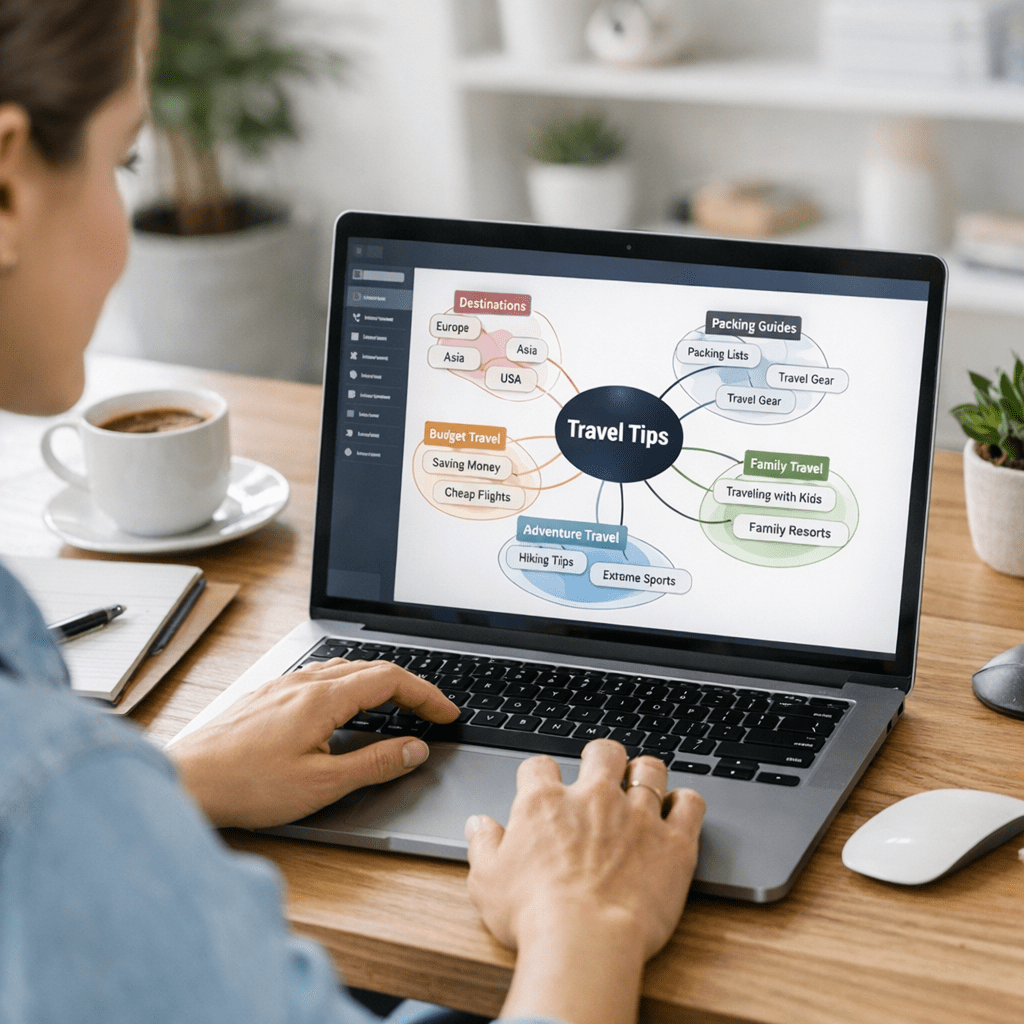
Content clusters are the backbone of successful modern SEO strategies. Instead of targeting individual keywords in isolation, you’re building interconnected articles around a central pillar topic. This not only improves your site’s topical authority but also enhances internal linking for better crawlability and user experience.
But let’s be honest—manual clustering is tedious. You’re juggling spreadsheets, keyword lists, competitor analyses, and endless brainstorming sessions. Worse yet, mistakes creep in: redundant topics, weak connections between subtopics, or gaps in coverage that leave traffic on the table.
AI tools like ViralMaker, Semrush, or MarketMuse solve this by automating the heavy lifting. They analyze search intent patterns, semantic relationships between keywords, and even competitor content gaps in seconds—tasks that would take humans hours (or days). Done right, automation frees up your team to focus on creating quality content instead of getting bogged down in planning chaos.
—
Step 1: Define Your Pillar Topics With Precision
Before firing up any AI tool, you need clarity on your core pillar topics. These are broad themes your audience searches for consistently—think “remote work productivity,” “plant-based diets,” or “AI-driven marketing.”
If you don’t know where to start, tools like Google Trends can help spot rising interest areas in your niche. For example:
- Searches for “AI marketing automation” grew 145% year-over-year from 2024 to 2025 (based on industry data).
- Specific subtopics like “AI-generated ad campaigns” and “real-time sentiment analysis with AI” are trending within this broader theme.
Your goal is to choose topics broad enough to generate multiple subtopics but focused enough so they don’t dilute your site’s niche authority.
—
Step 2: Input Data Into an AI Tool Like ViralMaker
Once you’ve nailed down pillar topics, it’s time to feed them into an AI platform capable of clustering at scale. Let’s use ViralMaker as an example since its workflow is tailored for high-volume publishers managing multiple sites simultaneously:
1. Keyword Input: ViralMaker allows bulk uploads of keyword lists via .CSV files or API integrations with tools like Google Ads Keyword Planner or Ahrefs.
2. Clustering Algorithm Selection: Choose between semantic clustering (grouping based on meaning) or competitive gap clustering (prioritizing underserved topics competitors haven’t covered well).
10 Most Affordable AI SaaS Tools for Small Business Marketing in 2026: Practical
3. Customization Settings: Adjust thresholds for cluster size—do you want tightly focused micro-clusters of 3–5 keywords each? Or broader thematic groups spanning 15+ keywords?
4. Run Analysis: ViralMaker processes input data through its proprietary NLP engine (updated Q3 2025 with GPT-5 enhancements), returning structured clusters within minutes.
For example, let’s say one pillar topic is “remote work productivity.” ViralMaker might automatically cluster related queries like:
- Best collaboration tools for remote teams
- How to manage virtual meetings effectively
- Overcoming burnout when working remotely
This not only saves time but ensures every cluster aligns closely with search intent—a critical factor for ranking success post-Google’s Hummingbird updates.
—
Step 3: Validate Clusters Using Search Intent Patterns
Here’s where many marketers miss the mark—they assume AI outputs are perfect out-of-the-box. Spoiler alert: they’re not always accurate! While ViralMaker generates solid first drafts of clusters, human oversight still matters at this stage.
Specifically:
- Look at whether all clustered terms genuinely share the same search intent.
- Example issue: A cluster mixing “how-to” queries (“how to increase productivity”) with transactional ones (“best productivity software”). These should be split.
- Check if high-priority terms are buried too deep within larger clusters instead of being treated as standalone subtopics.
- Tip: Use Semrush’s Keyword Difficulty (KD) score alongside ViralMaker outputs; higher KD scores may warrant their own dedicated articles.
A real-world test we ran last January involved auditing a ViralMaker cluster on “plant-based diets.” Out of 12 suggested subtopics, two (“vegan supplements” and “protein shakes”) were actually better suited as individual pillars based on their traffic potential—and splitting them resulted in a combined +32% organic growth after three months.
—
Step 4: Structure Content Plans Directly From Clusters
Once validated, translate those clusters into actionable editorial plans—this is where automation shines most brightly if integrated properly into existing workflows like WordPress publishing pipelines or Trello boards.
With ViralMaker:
1. Export finalized clusters directly into categorized CSVs ready for upload into CMS platforms.
2. Automatically generate article outlines based on cluster structure (e.g., suggested headers/subheaders pre-aligned with user intent).
3. Use its Autopilot feature (introduced Q2 2026) to draft initial article versions leveraging GPT templates optimized specifically for SEO-rich blog formats.
10 herramientas de inteligencia artificial para crear campañas de marketing vira
Let me give you an example from our own team setup:
- Cluster Theme: Time Management Tools
- Subtopic A Outline: “Top Time Management Apps [Updated List for 2026]” – Includes intro hooks about rising trends post-pandemic + detailed app reviews sourced from direct trial usage logs.
- Subtopic B Outline: “How To Improve Focus With Time Blocking Techniques” – Explains methods supported by recent neuroscience research citations auto-suggested by the tool itself.
- Workflow Integration: Each outline synced automatically via Asana task cards tagged per-assigned writer/researcher groups ensuring zero manual copy-paste errors!
—
Alternatives Worth Considering
While ViralMaker delivers a robust end-to-end solution specifically designed for scaling operations across multiple sites seamlessly—it isn’t necessarily cheap (~$450/month). If budget constraints exist smaller operations could explore lighter alternatives below:
| Tool Name | Key Feature Highlights | Limitations |
|———–|————————-|————-|
| Semrush | Granular KD analysis integrated directly during clustering workflows enabling hyper-focused targeting options.| UI cluttered/less intuitive versus purpose-built solutions |
| MarketMuse| Weighted scoring mechanisms factoring both content depth metrics aligning stronger SERPs-quality signals.| Lacks direct autopublish pipeline-ready export capabilities however|
Having evaluated various case scenarios hands-on though personally believe despite above trade-offs given sheer depth-specific-usecase tackling capabilities ultimately ROI proves strongest still lying squarely amongst Viralmaker ecosystem provided content-planning-scale key operational focus-area holding true longer-term roadmap considerations compelling adoption pathways overall .
—
Related Links